

Operations Platform
Traceable operations from material receipt to shipment.
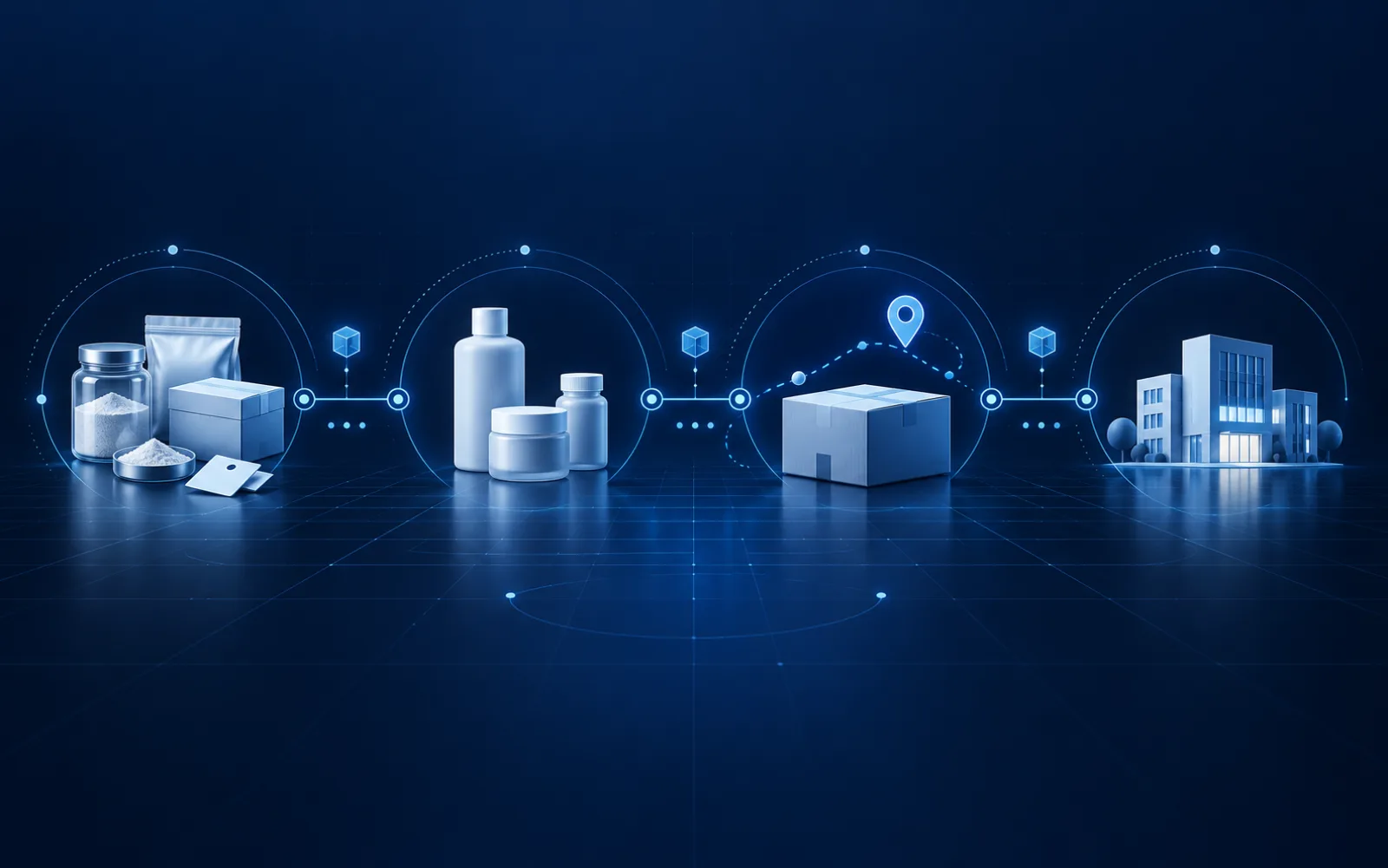
An internal logistics and production system that connects the records behind purchasing, inventory, manufacturing, fulfilment, and shipment.
The operational problem
Operational data loses value when it becomes disconnected.
A business cannot confidently plan production or fulfil an order when material definitions, supplier lots, stock, formulas, production activity, and shipment status live in separate files or rely on memory.
- Teams need to understand what stock is current, reserved, available, or expected—not just see a manually edited balance.
- Production needs calculated requirements and a durable record of the materials, lots, instructions, and work involved.
- Fulfilment needs finished-stock reservations and shipment status connected back to the product and production history.
How it works
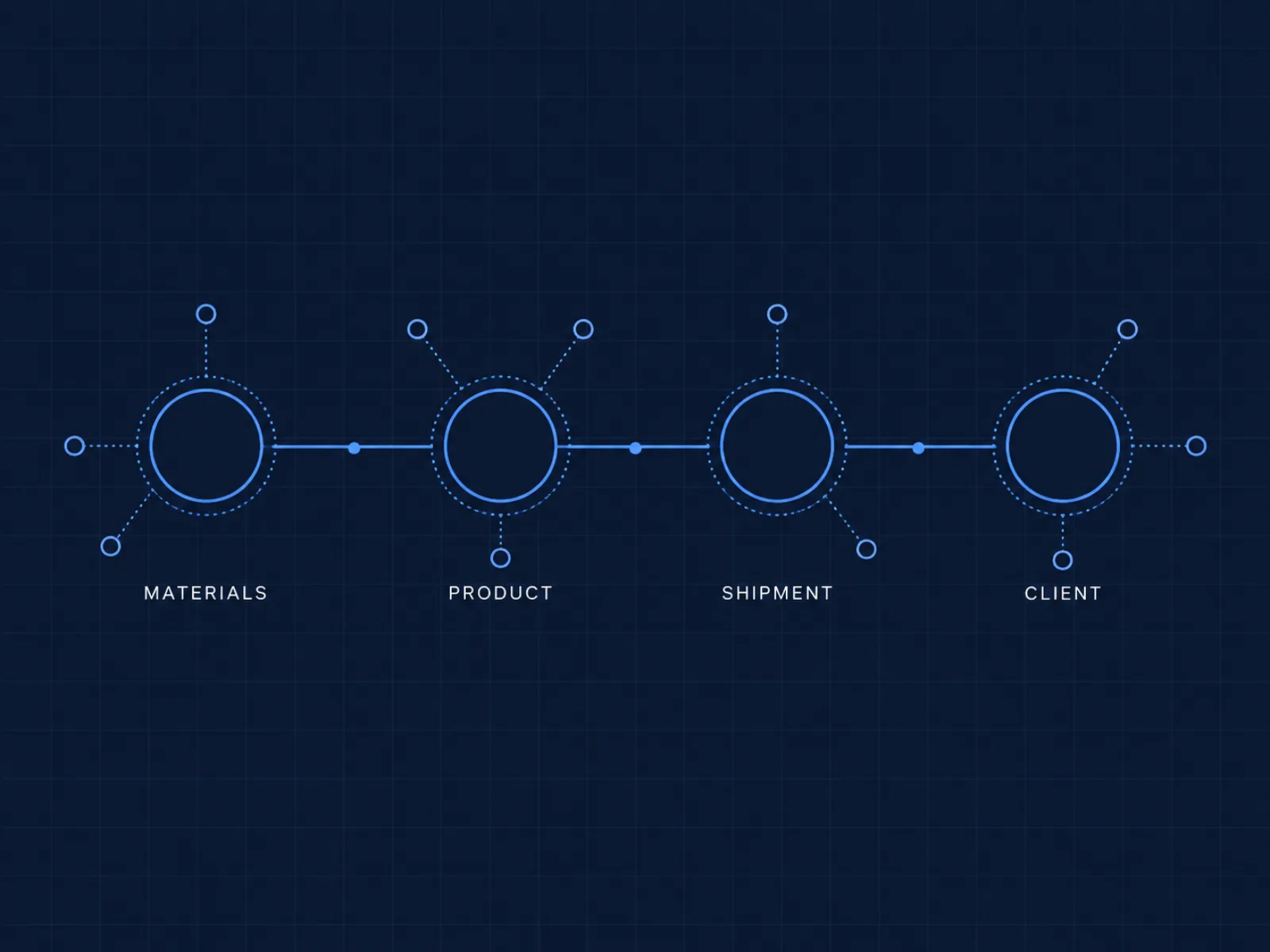
One connected path from incoming materials to outgoing product.
- 01
Define the operational catalogue
Partners, raw and packaging materials, variants, units, categories, products, and product variants form the reusable foundation for purchasing and production.
- 02
Receive and account for stock
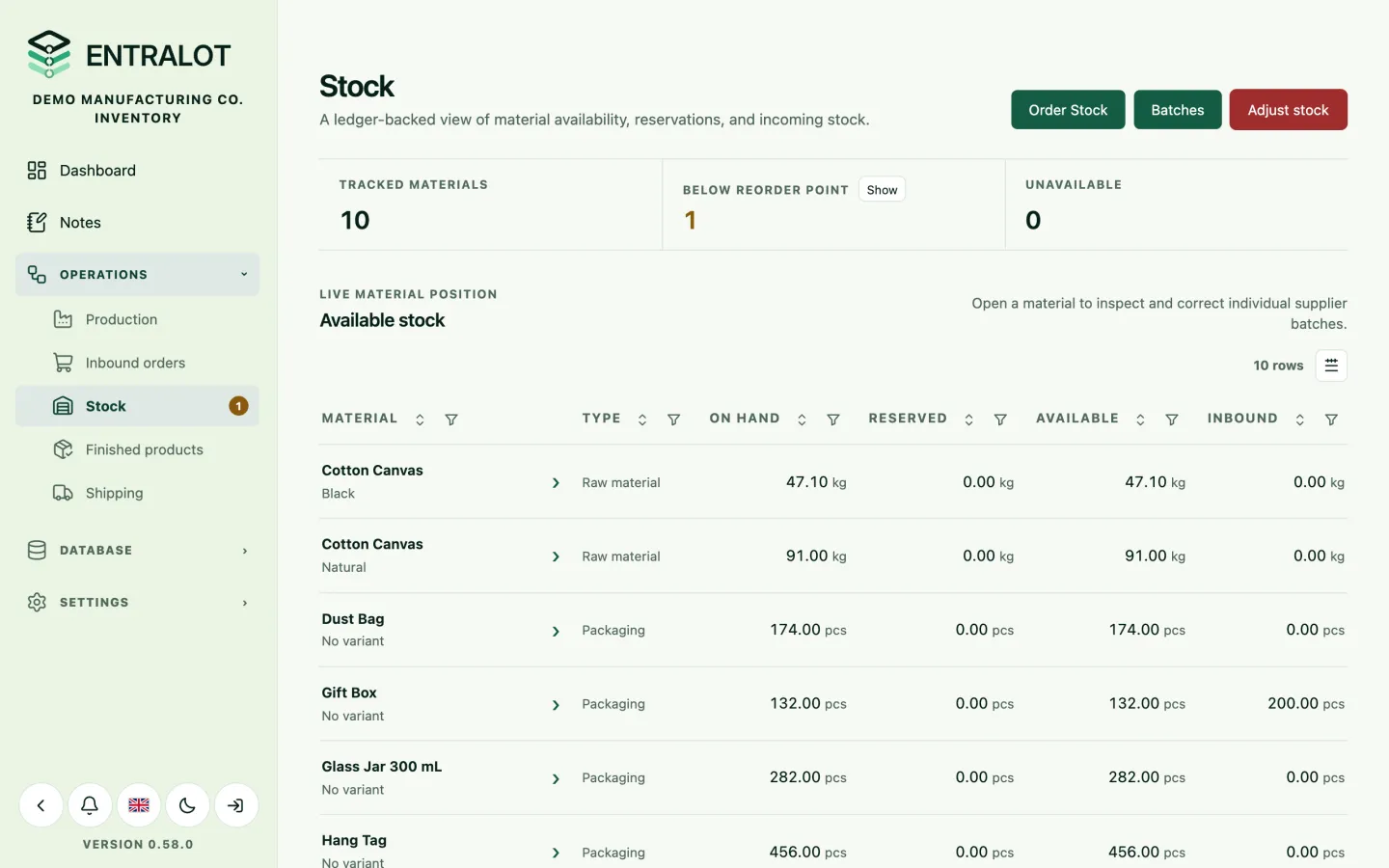
Inbound orders become supplier lots with recorded quantities, units, expiry details, documents, and movement-led inventory.
- 03
Plan and record production
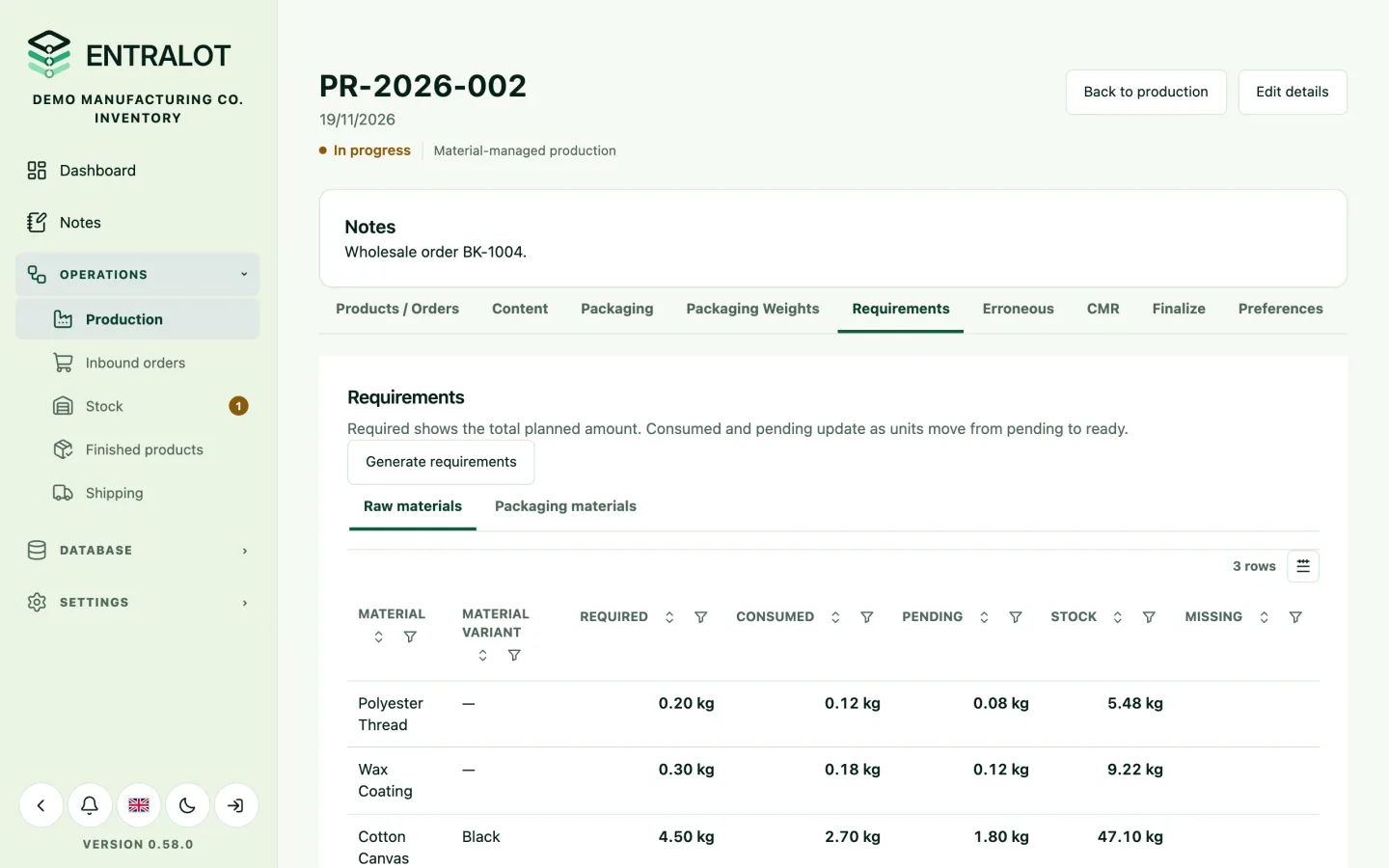
Production rounds calculate material and packaging requirements from the applicable recipe, surface stock availability, and record work as tasks move through production.
- 04
Reserve, fulfil, and ship
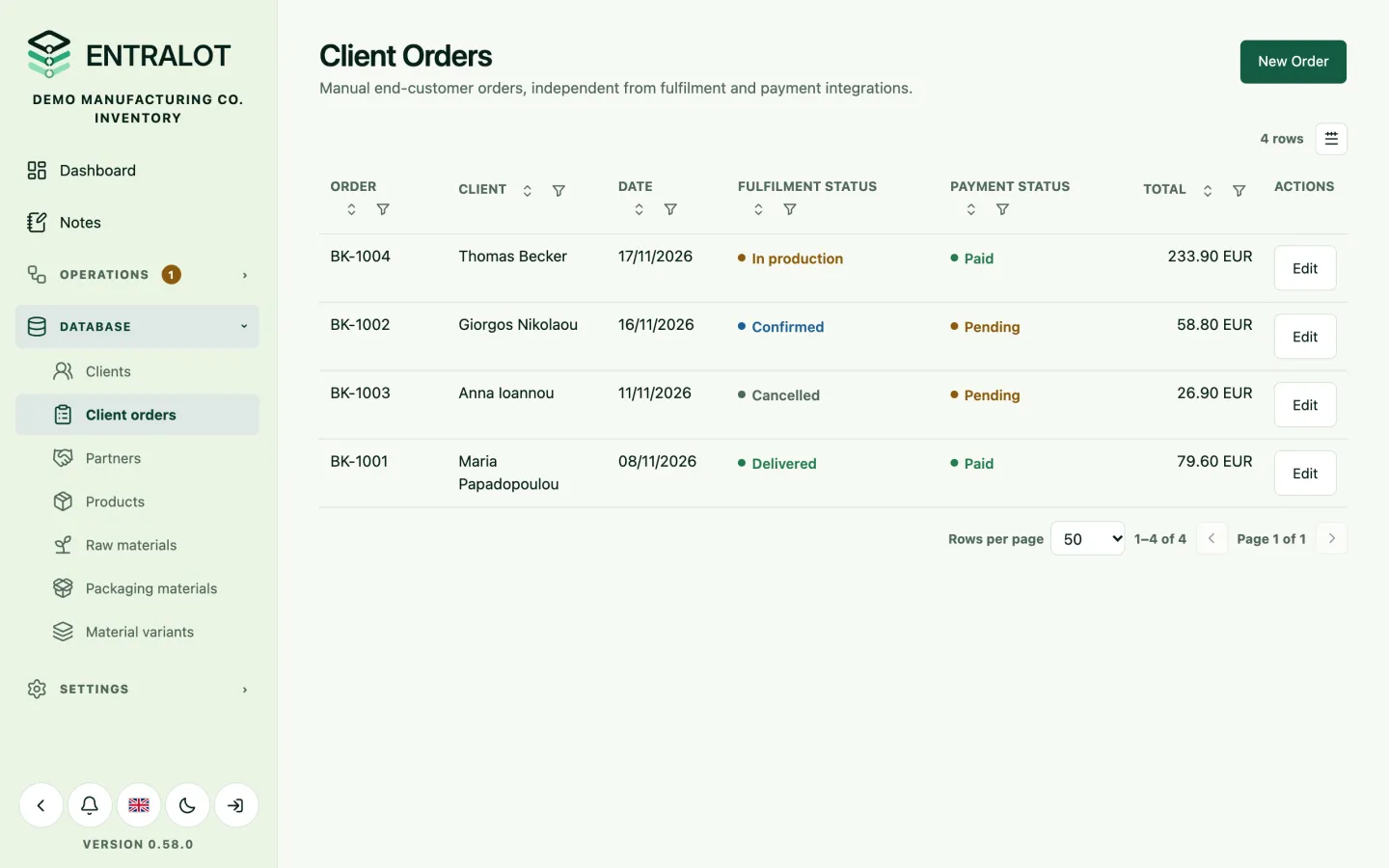
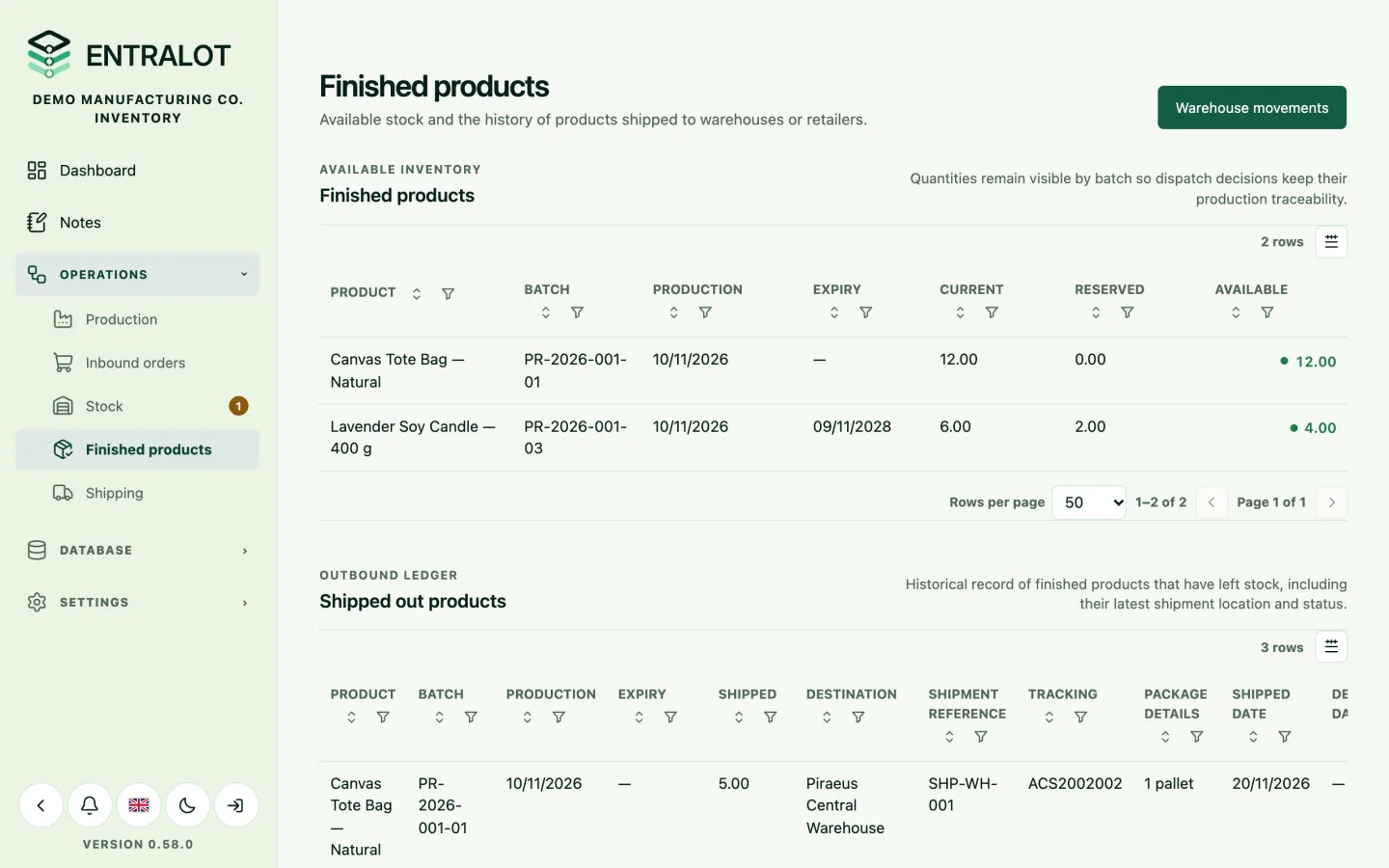
Shipment orders reserve finished stock, retain the fulfilment context, and move through preparation, shipment, and delivery status.
Traceability in the workflow
The system preserves the operational explanation behind each record.
Stock is represented through receipts, consumption, reservations, releases, and documented adjustments rather than silent quantity edits. Product recipes and manufacturing processes retain draft and active versions, while production records capture the materials and lot data used at the time.
- Supplier lots, stock movements, and availability
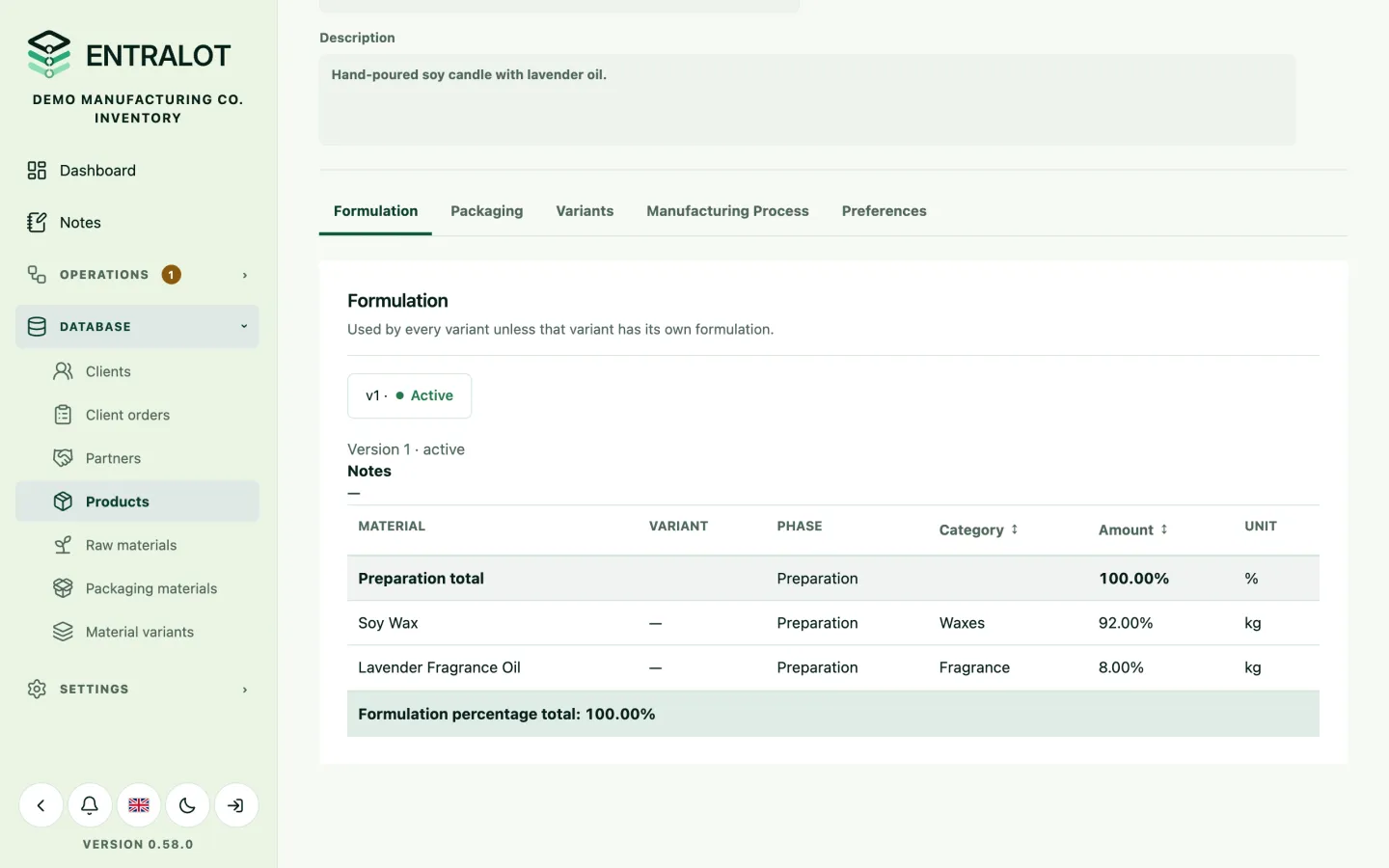
- Formula validation and variant-specific overrides
- Production requirements, tasks, and manufacturing records
- Finished-stock reservations and shipment status
Built for operational detail
Model the materials, products, and working rules the operation actually needs.
Administrators can maintain the reusable data and presentation rules that make the day-to-day workflow accurate, without flattening important distinctions between a general item and its specific variant.
- Partners, material categories, units, and variants
- Product variants, shared recipes, and controlled overrides
- Manufacturing-process versions and production phases
- Low-stock thresholds, decimal formats, and table preferences
- Roles, permissions, documents, and archive/restore controls